



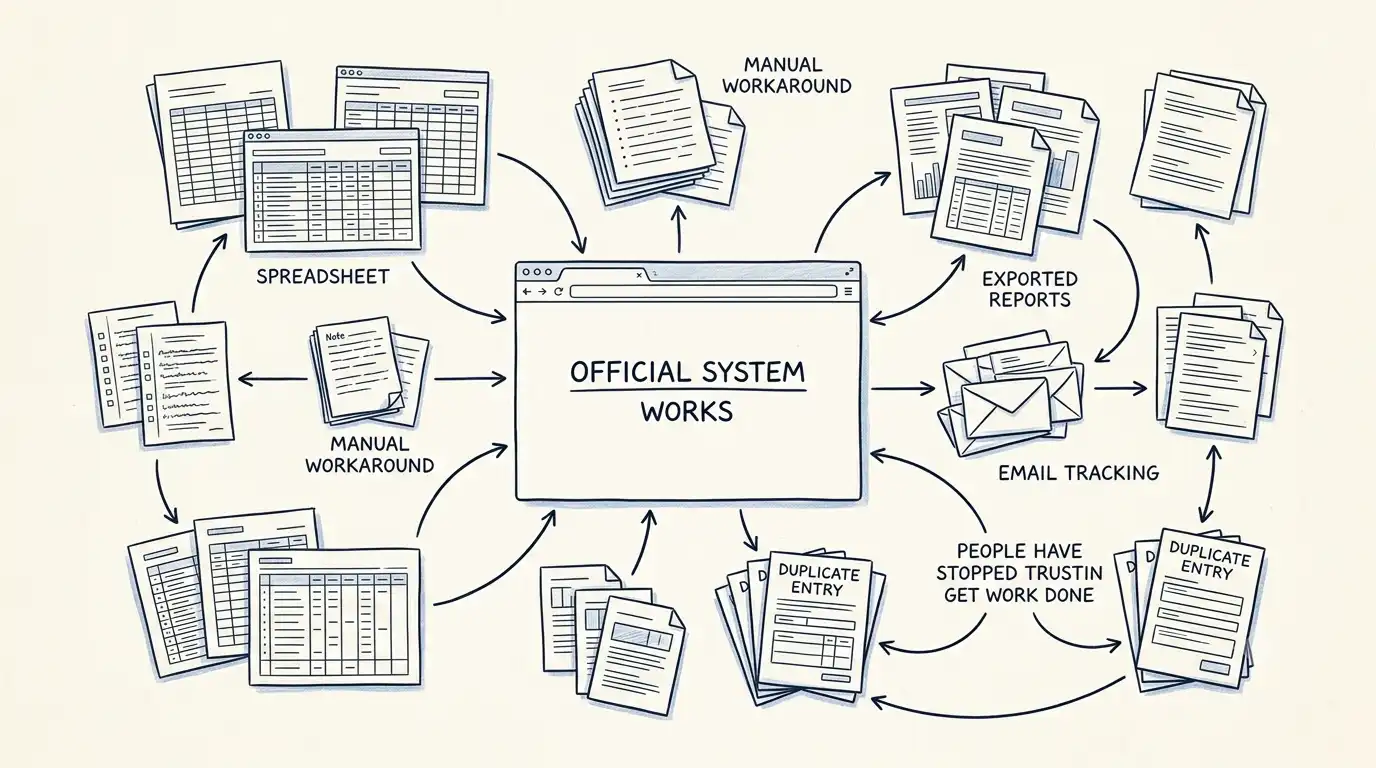
Software does not have to crash to be a problem. Sometimes it works exactly as programmed but makes people waste time, repeat work and find their own ways around it.
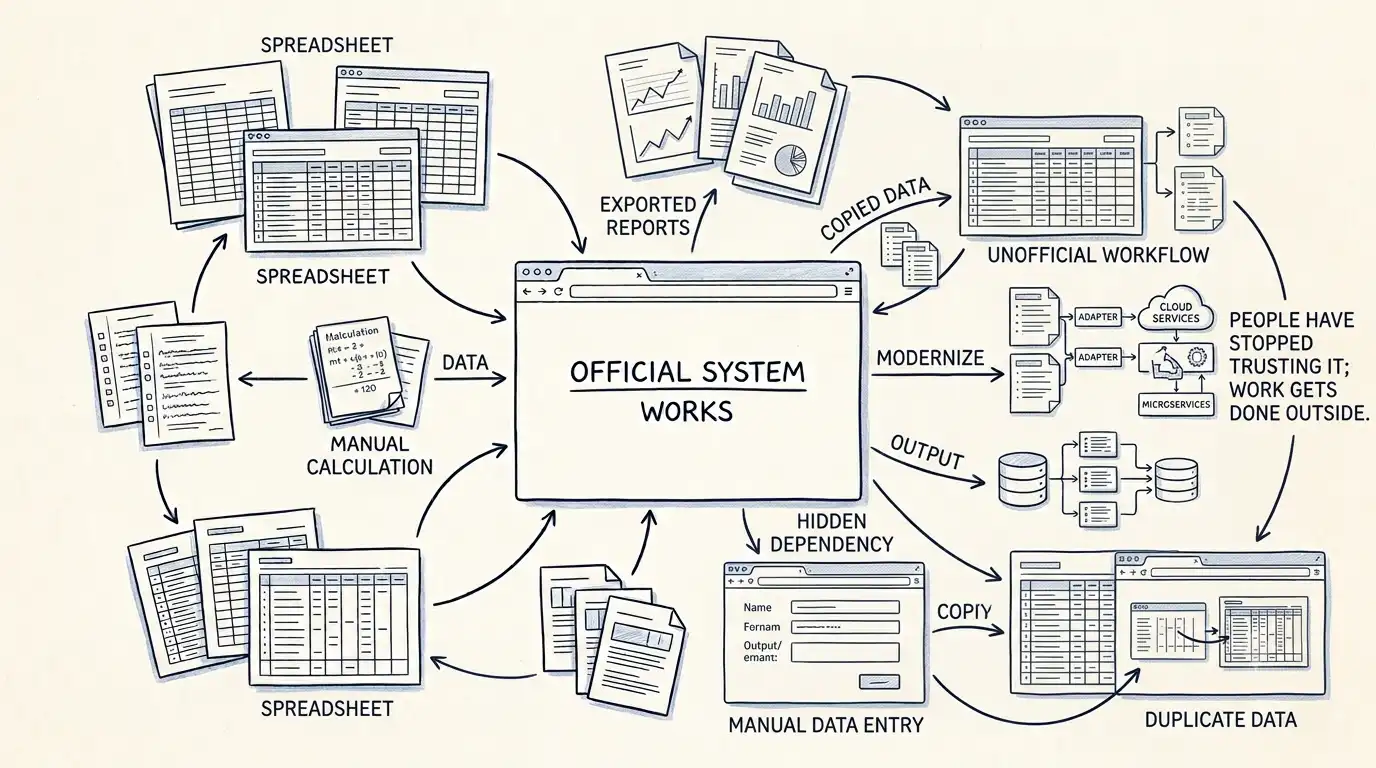
Almost every growing business has an unofficial spreadsheet that keeps an important process running. Instead of dismissing it, look at what it is telling you.
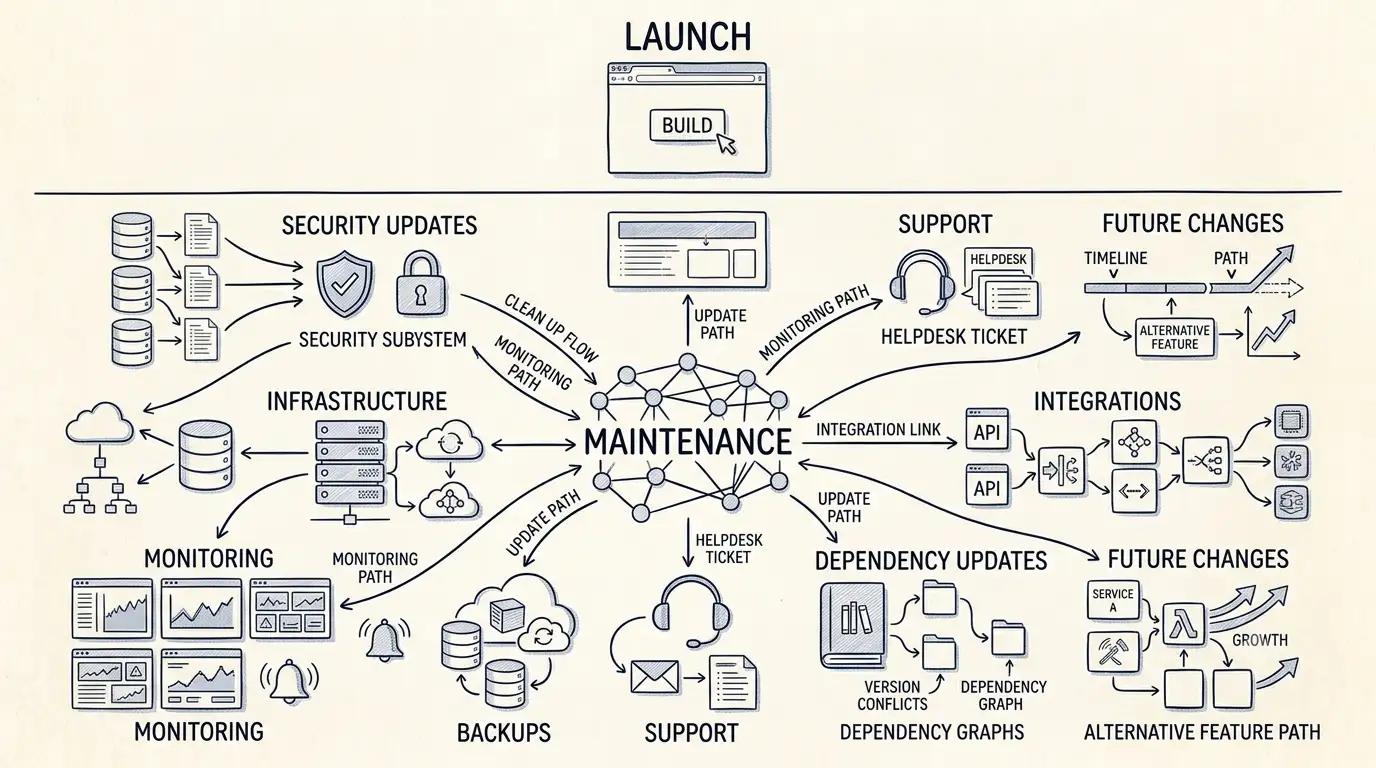
The initial development budget is only part of the cost of software. The bigger question is what it will take to operate, maintain and change it over the next five years.
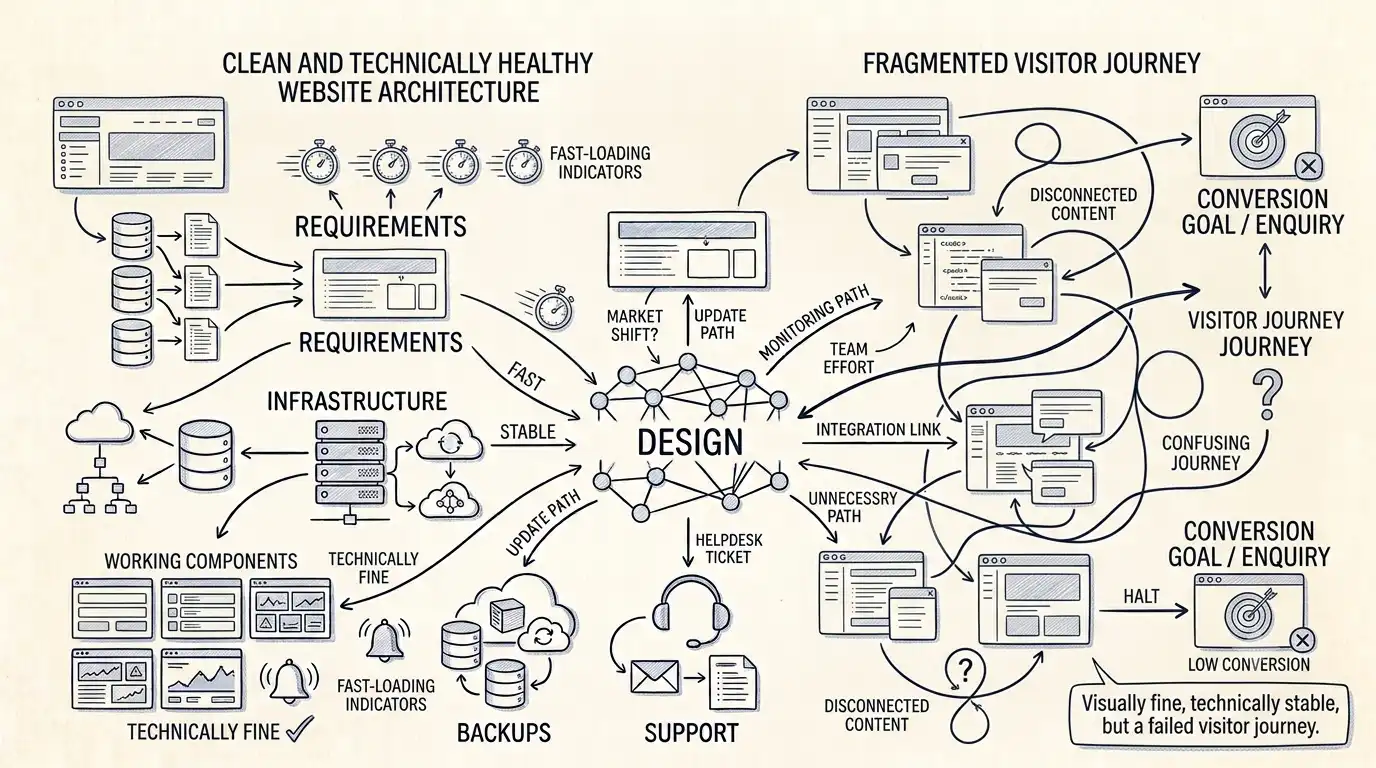
A website can load quickly, have clean code and pass technical checks while still confusing customers and failing to support the business.
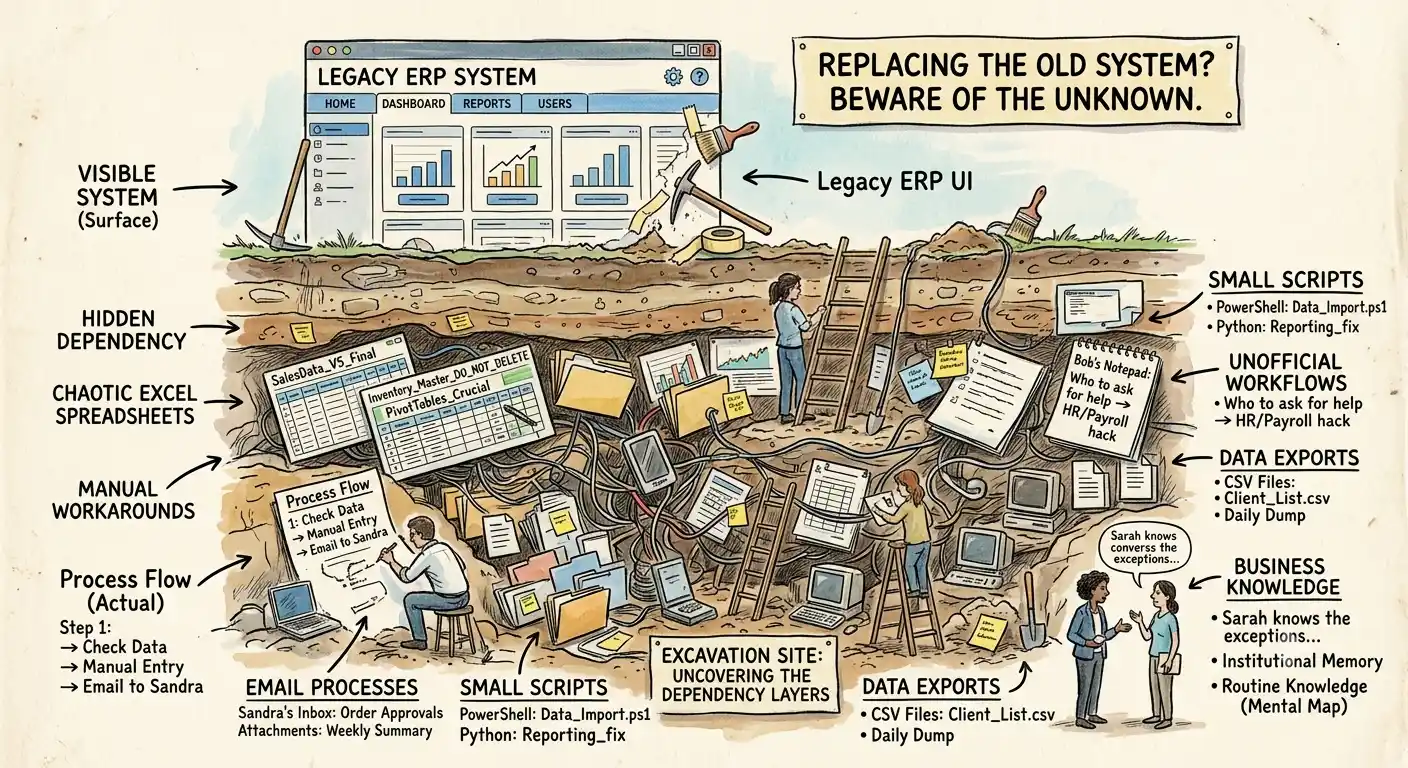
The official documentation rarely contains the full story. Before replacing an important system, find the reports, spreadsheets, integrations and unofficial processes that people depend on.
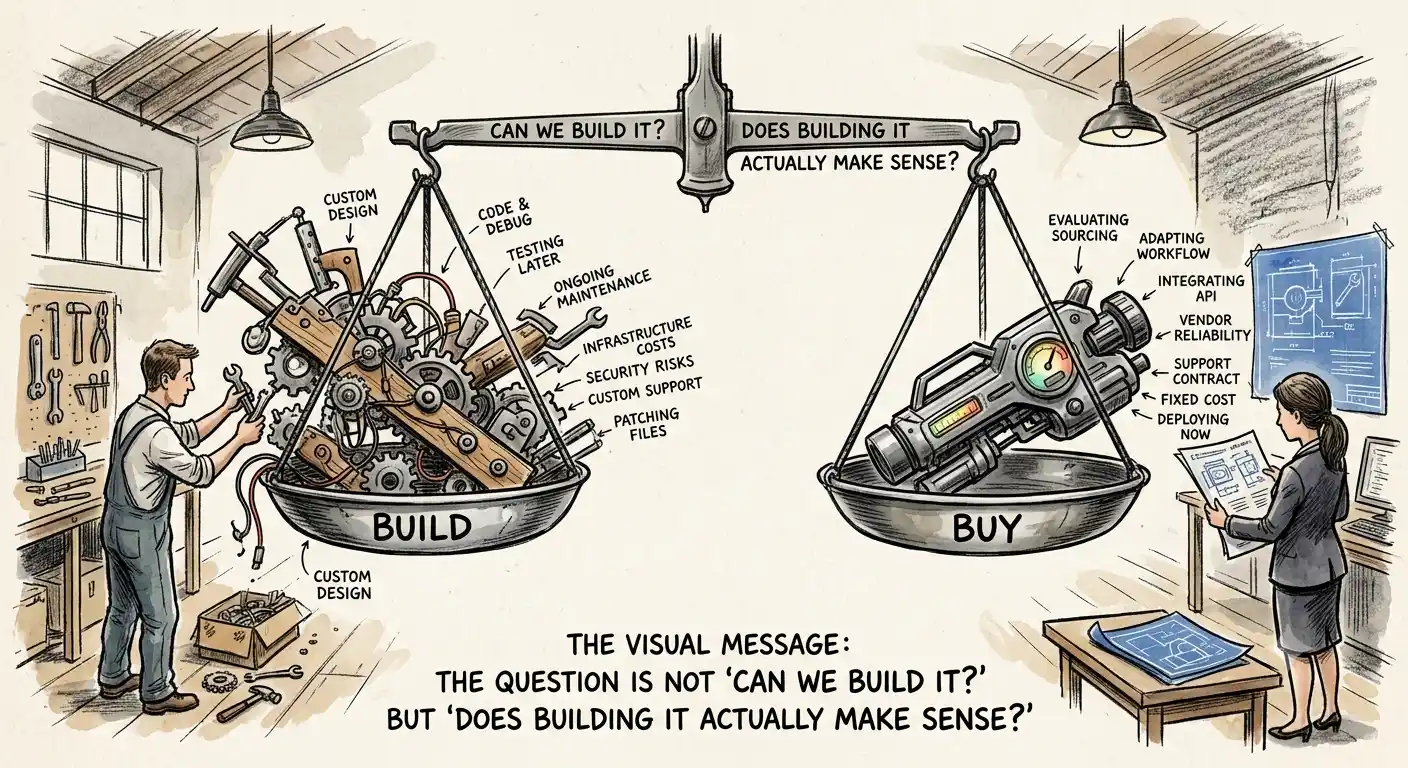
Custom software gives you control, but control comes with responsibility. Sometimes an existing product is the better business decision.

Choosing a software partner shouldn't come down to price or a list of technologies. The more important questions reveal how the team thinks, communicates and takes responsibility.
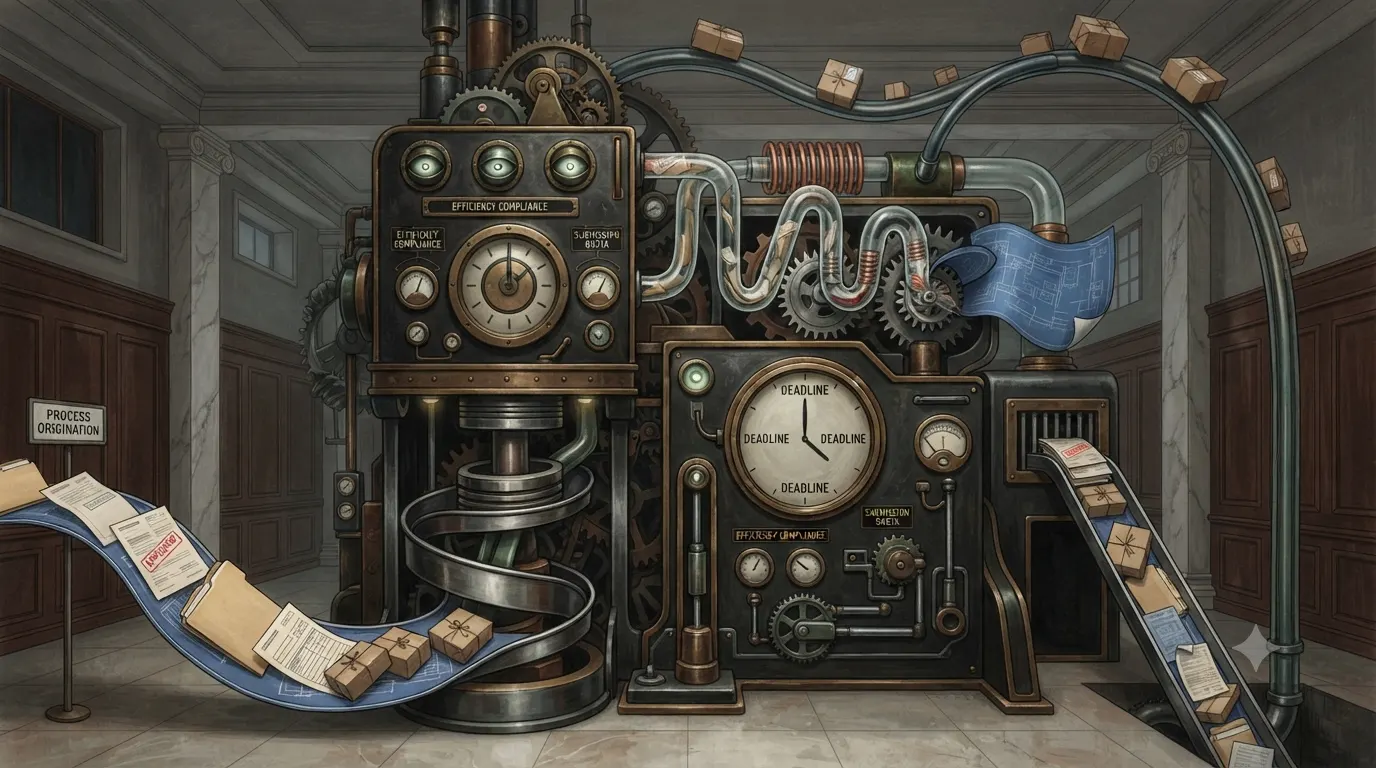
Sometimes a business changes its process simply because its software cannot handle anything else. That's a warning sign.