



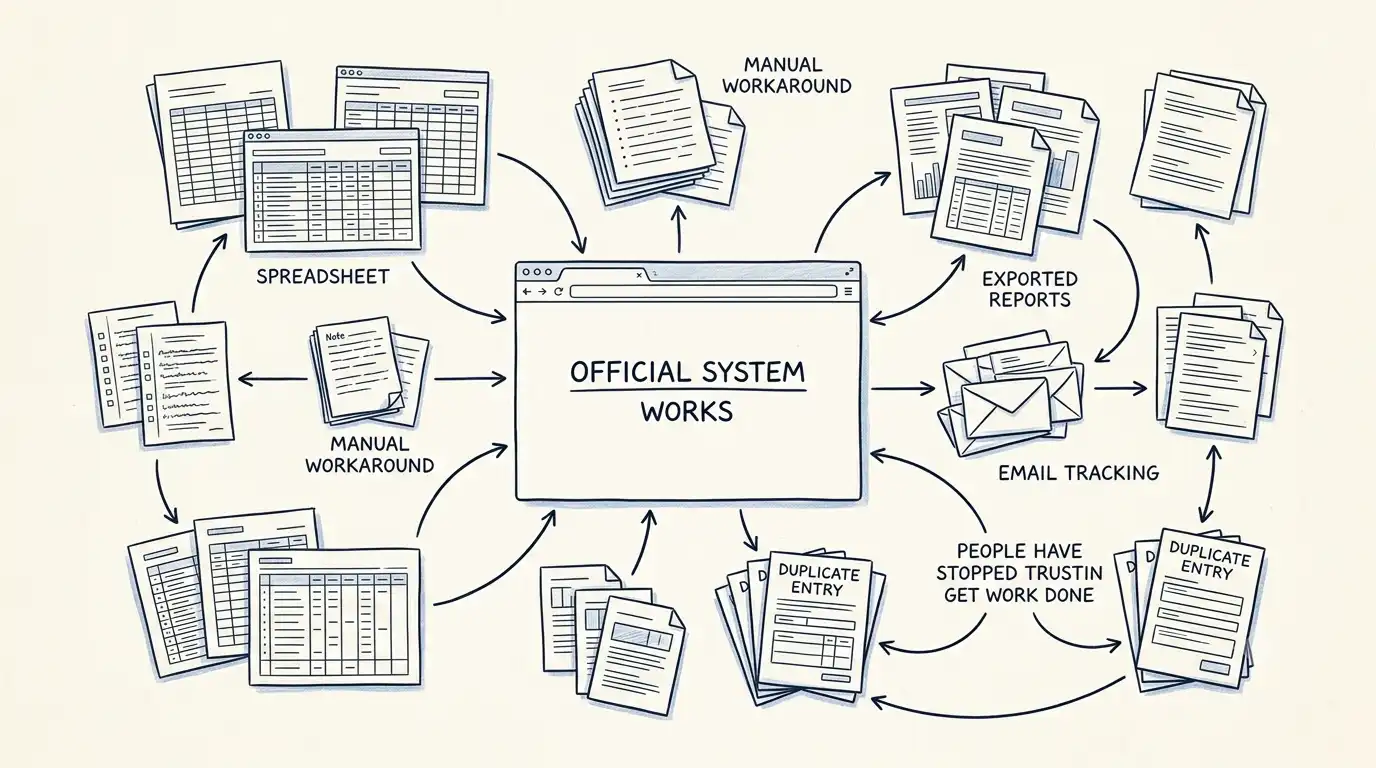
Software does not have to crash to be a problem. Sometimes it works exactly as programmed but makes people waste time, repeat work and find their own ways around it.
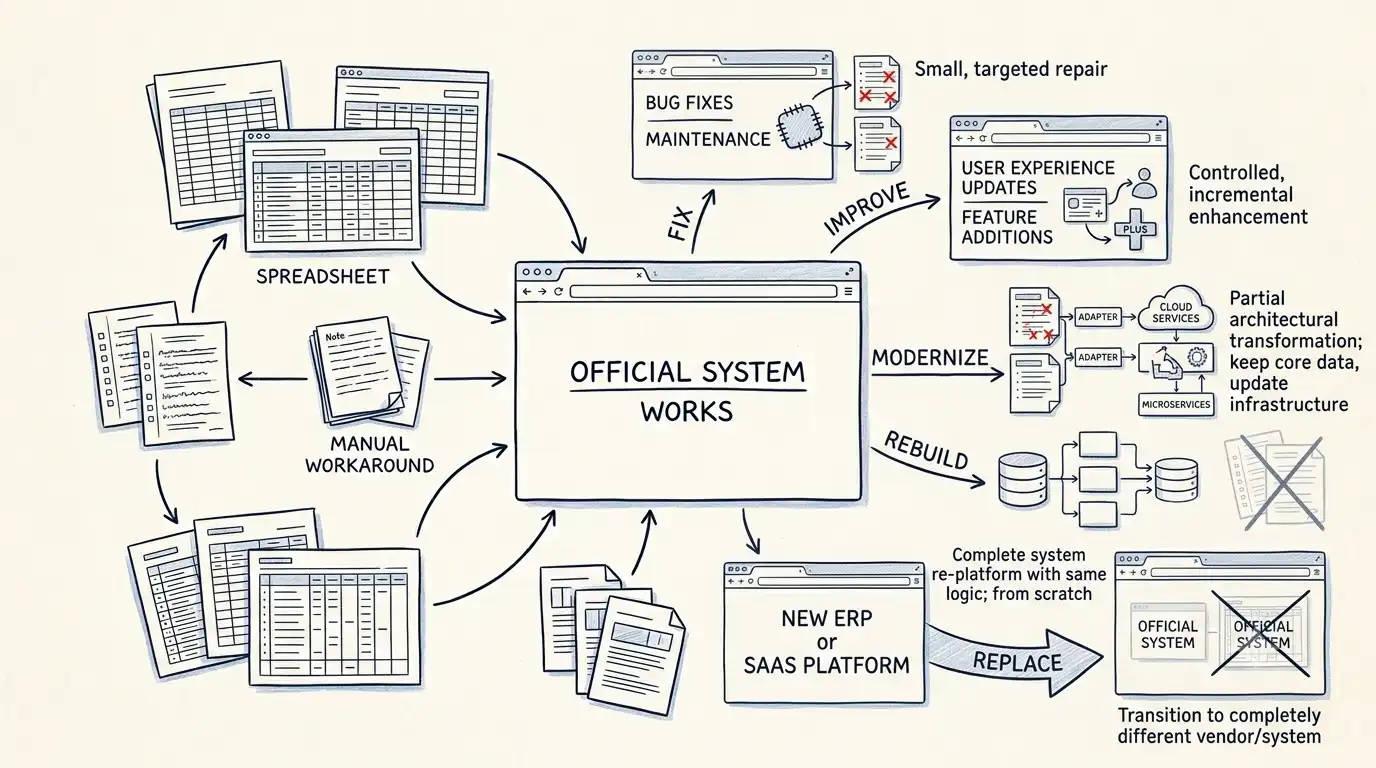
When an existing system becomes difficult to work with, there are usually three choices: fix it, rebuild it or replace it. Choosing correctly can save months of unnecessary work.
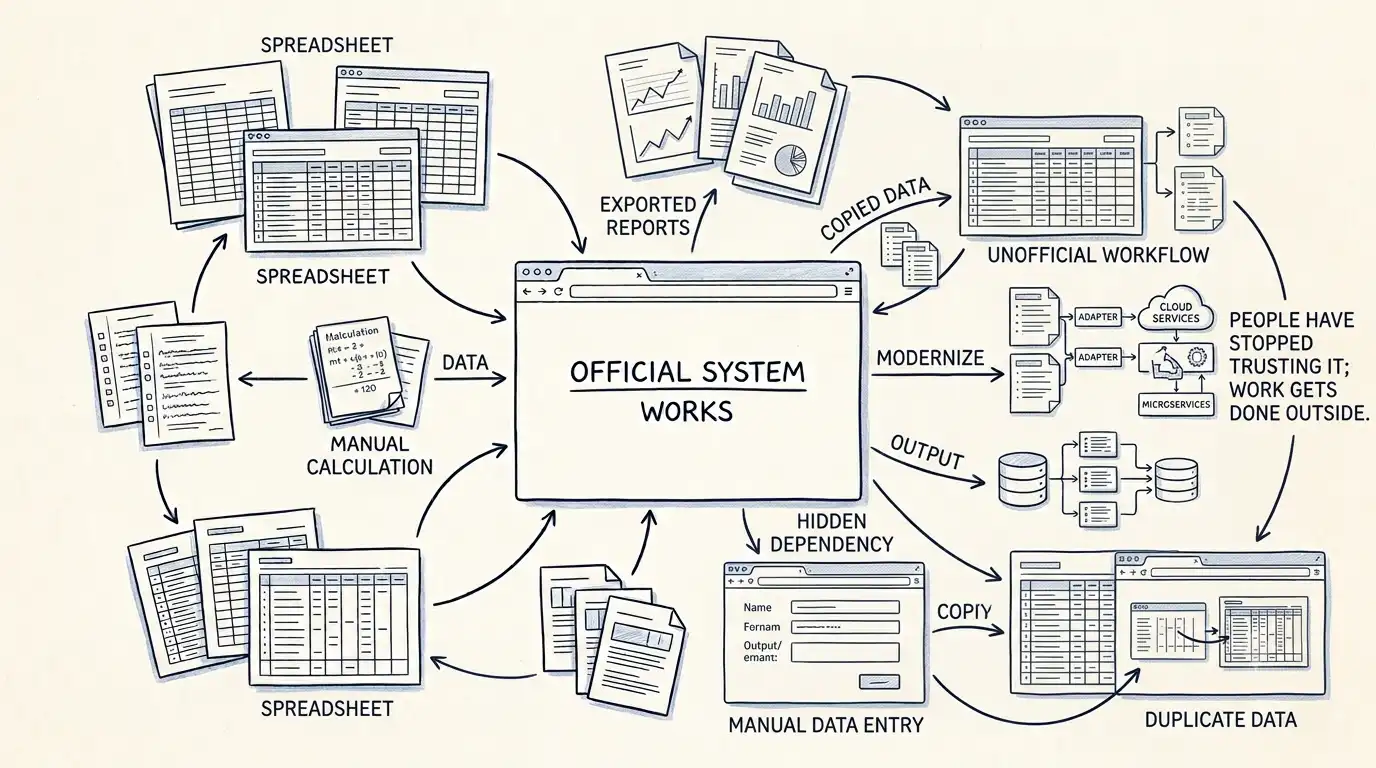
Almost every growing business has an unofficial spreadsheet that keeps an important process running. Instead of dismissing it, look at what it is telling you.
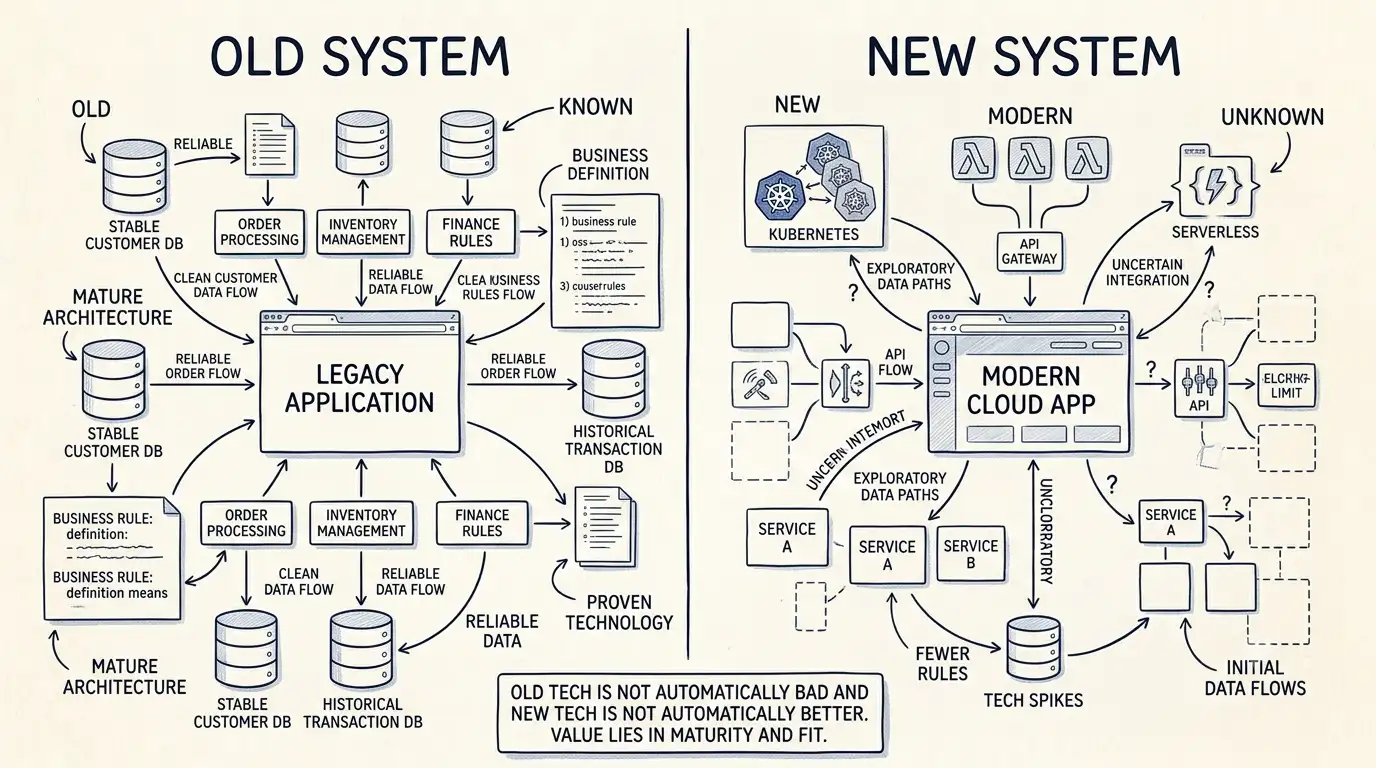
Calling software "legacy" tells you almost nothing about whether it should be replaced. Some old systems are reliable, valuable and worth keeping.
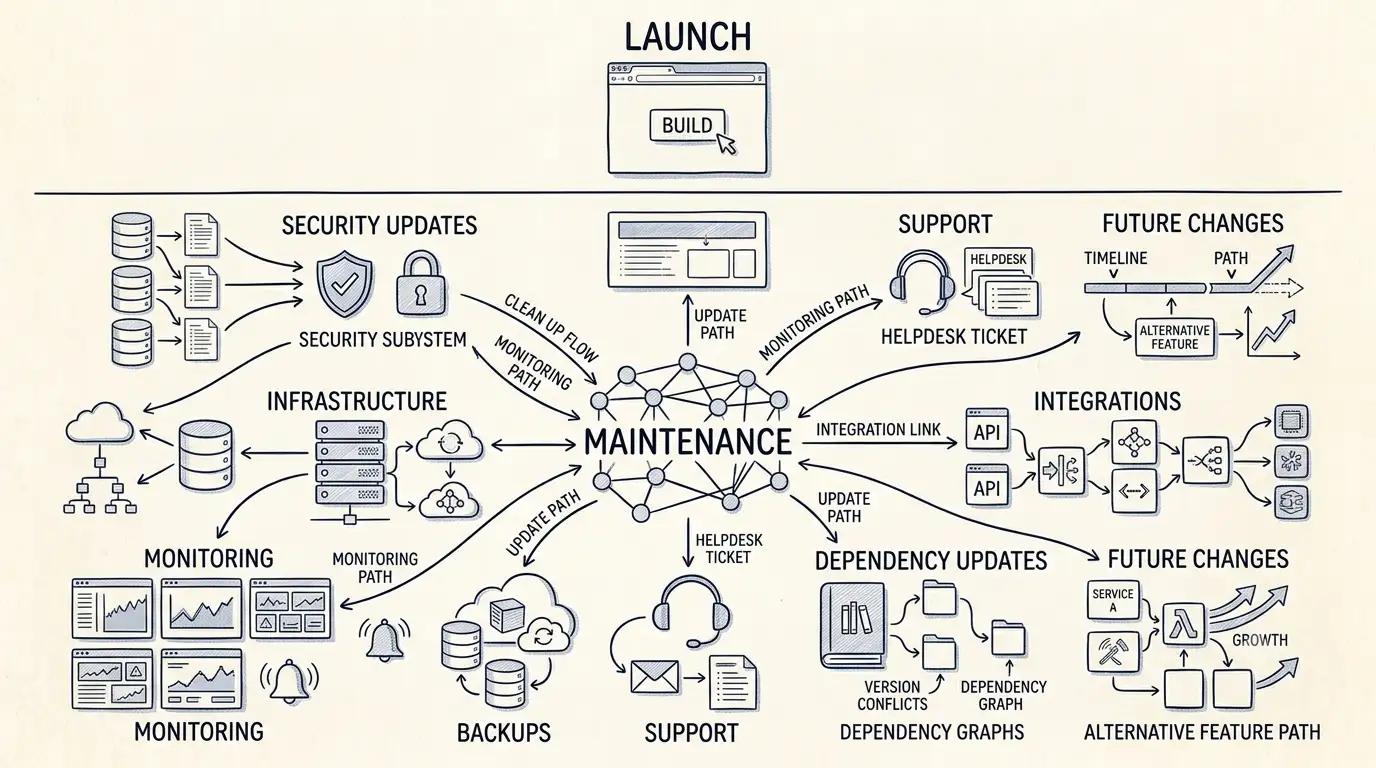
The initial development budget is only part of the cost of software. The bigger question is what it will take to operate, maintain and change it over the next five years.
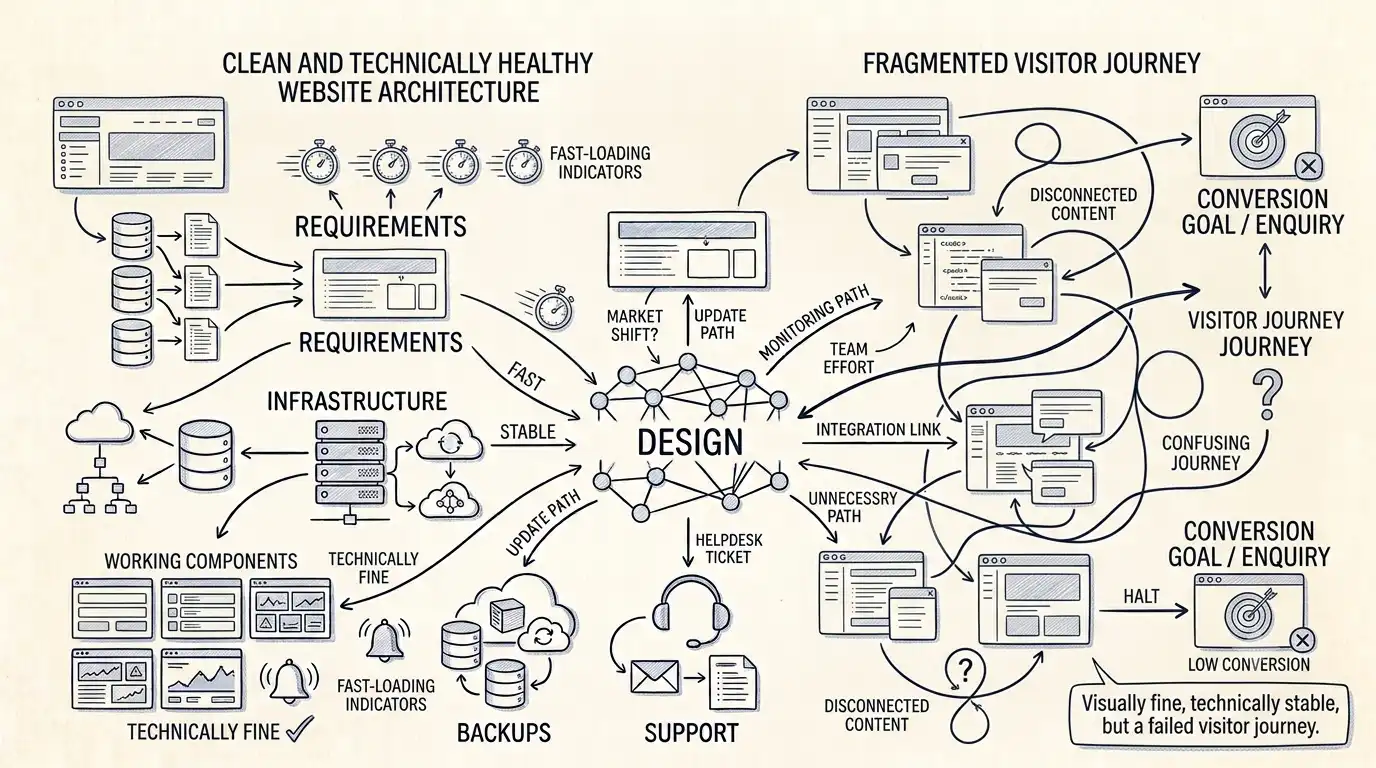
A website can load quickly, have clean code and pass technical checks while still confusing customers and failing to support the business.
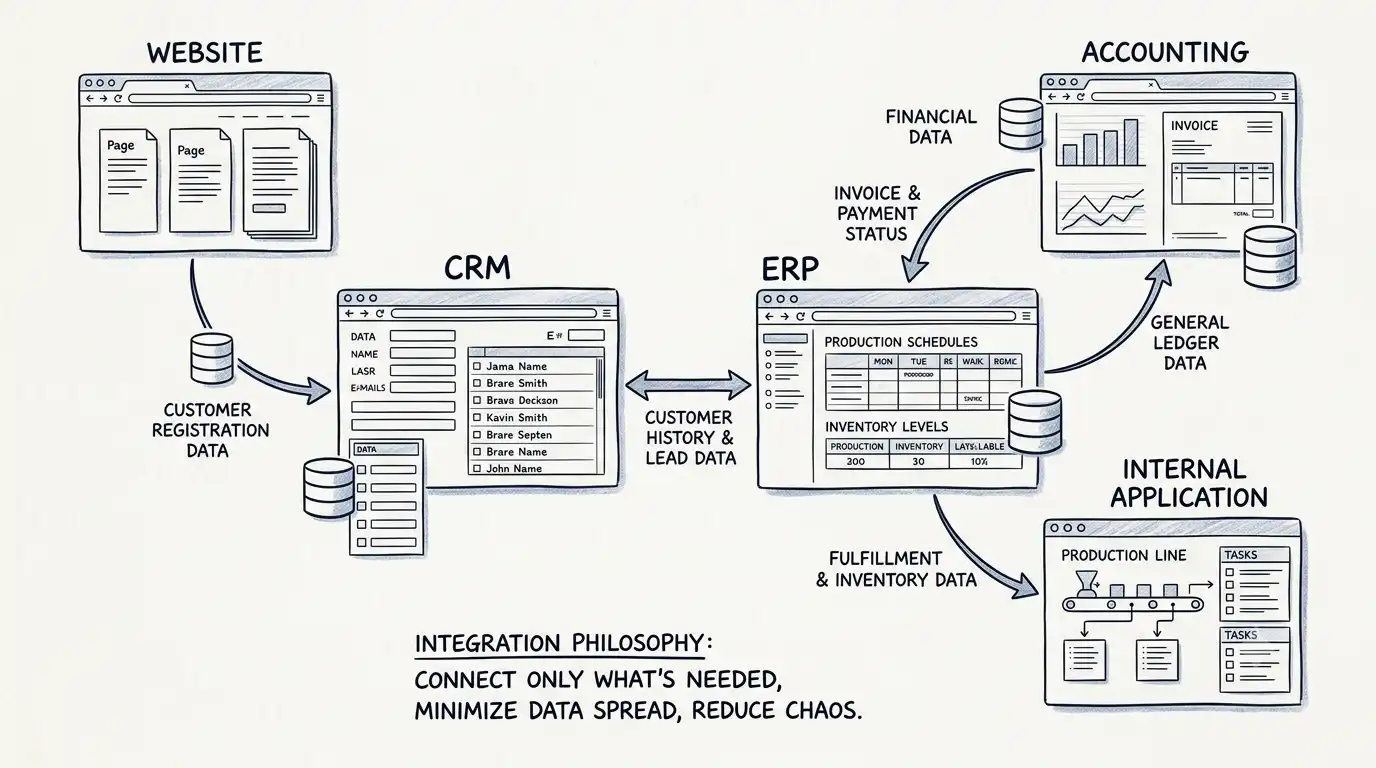
Businesses often approach integrations as a technical problem. The more important question is which information actually needs to move between systems, when and why.
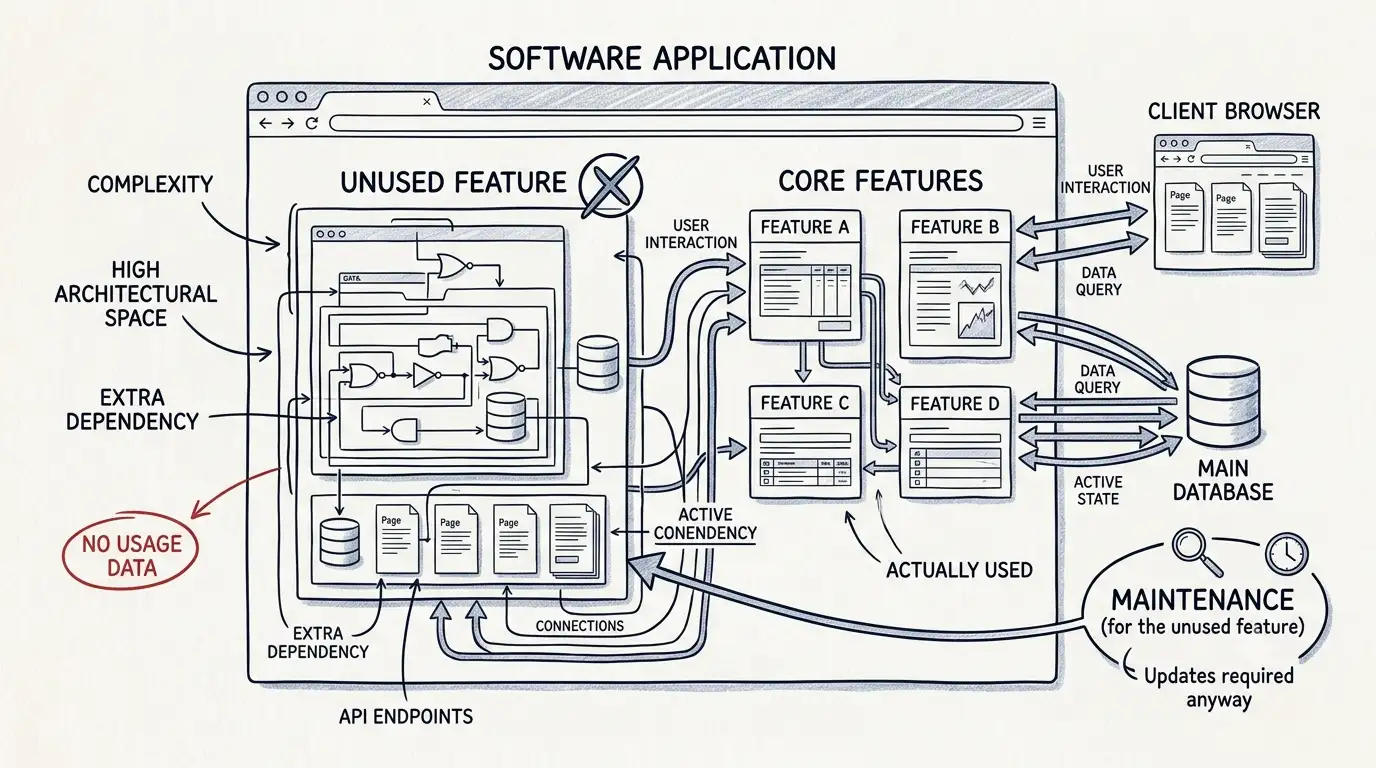
Features feel like progress, but unused functionality creates development cost, maintenance work and confusion. The best software is not necessarily the one with the longest feature list.
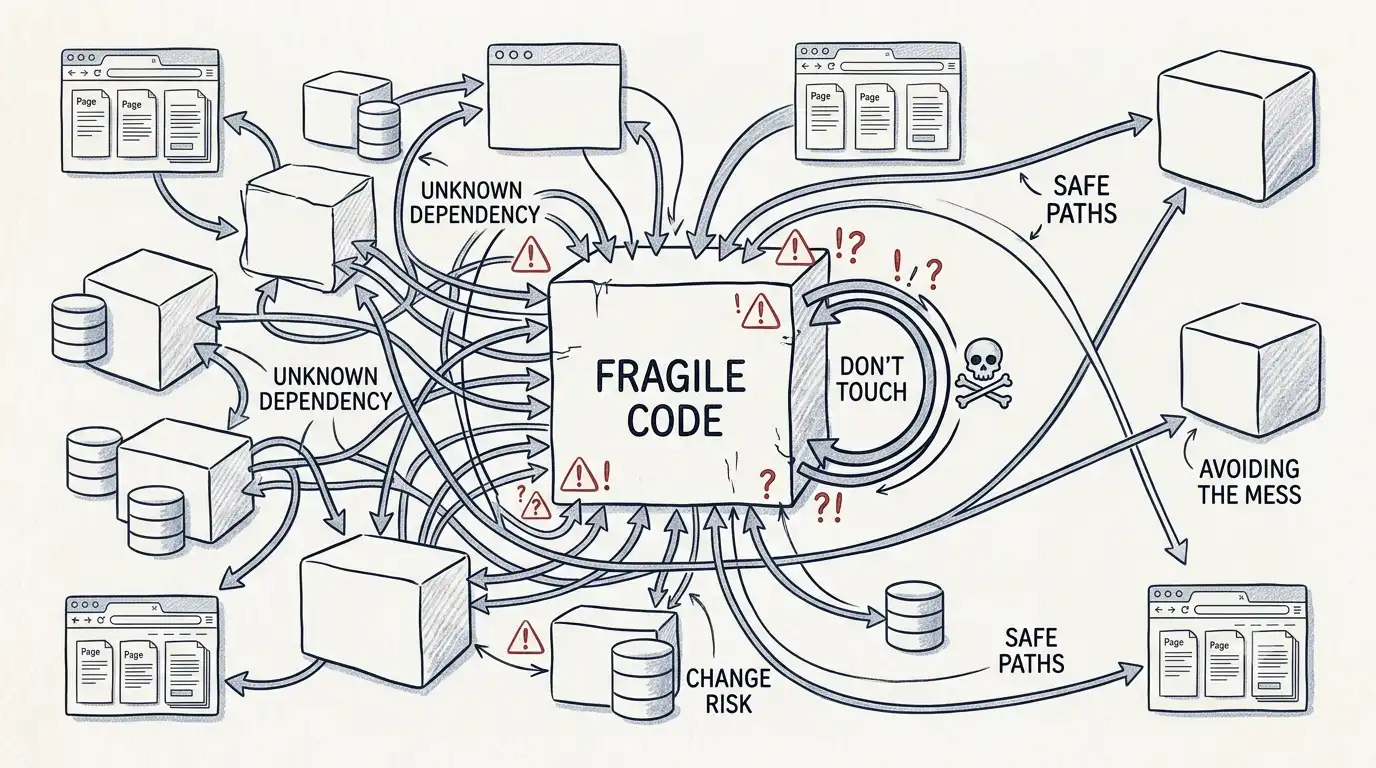
One of the clearest signs that software needs attention is when experienced developers become afraid to change it. Fear of change usually means the system has accumulated too much uncertainty.